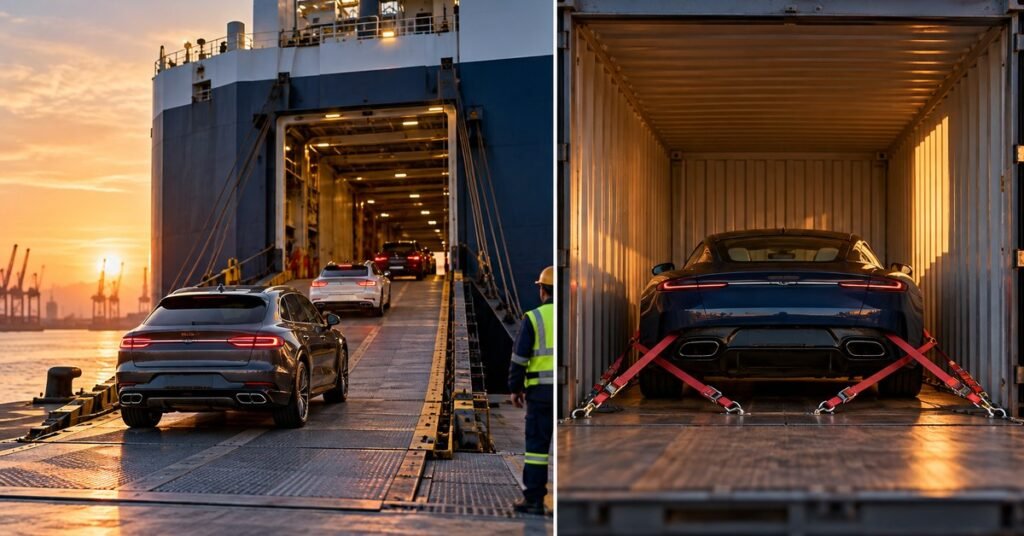
RoRo and container shipping move cars across the same seas in very different ways. With RoRo, your car is driven onto a vehicle carrier and driven off at the destination. With container shipping, it is secured inside a steel box that stays sealed until it is opened at the other end. The right choice depends on the car’s value, ground clearance and condition, and on whether you need anything else to travel with it.
Both methods run through Jebel Ali. DP World describes the port as having specialised RoRo facilities as well as container operations, including container stuffing and unstuffing for vehicles. This guide explains how each method works in practice and which cars suit which option.
How RoRo shipping works
RoRo stands for roll-on, roll-off. One major vehicle carrier describes the process simply: the vehicle is driven onto a specialised RoRo vessel, secured in place, then driven off at the destination. Port handlers, often called stevedores, drive the car on and off, and it is lashed to the deck for the voyage.
Carriers set conditions that follow from this method:
- The car must run. Carriers’ used-vehicle guidelines, such as one line’s shipping rules for used units, require the vehicle to be drivable with no mechanical issues.
- Personal belongings are restricted. The same guidelines state that no personal effects are allowed inside the unit. Rules vary between carriers and routes, so check before you pack anything in the boot.
- Ground clearance matters. Cars must clear the ramps between decks. One carrier’s receiving rules require enough clearance for on-board ramps with a minimum inclination of 6.5 degrees.
RoRo suits a standard, running car where cost and a regular sailing schedule matter more than keeping the car sealed. Opera Shipping’s RoRo car shipping service covers this option.
How container shipping works
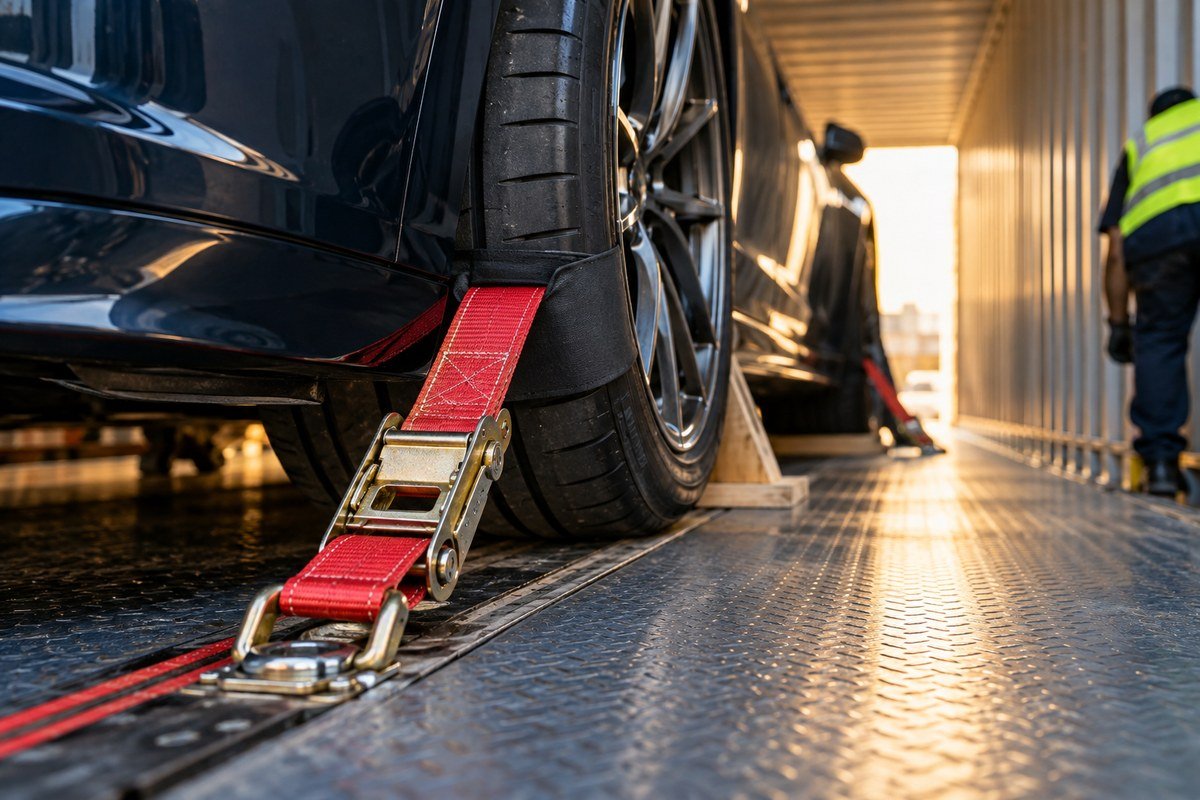
In a container, the car is driven or lifted in, then lashed from its chassis points so it cannot move. A container line’s guidance on vehicles describes typical stowage of two vehicles in a 20-foot container and four in a 40-foot, although the number depends on the cars’ size and on whether racking is used.
The container can then move by truck or rail without the car being unloaded, as the same line explains in its overview of shipping cars in containers. Your car stays inside from loading to unstuffing.
There are two ways to buy container space:
Shared container. Your car travels alongside other vehicles in one container, which spreads the cost. Shared space depends on other cars travelling on the same route, which can affect the departure date. Opera Shipping’s shared container service covers this option.
Dedicated container. The container carries only your car, or your cars. A dedicated container suits a high-value vehicle, because nobody else’s car is loaded or unloaded beside it.
A container can also carry a non-running car, loaded by forklift or similar equipment. RoRo carriers generally expect vehicles to be drivable, with limited exceptions for units loaded on towbars or cargo carriers.
A side-by-side comparison
| Point to decide | RoRo | Shared container | Dedicated container |
|---|---|---|---|
| Car must run | Yes | Depends on loading method | No |
| Sealed for the voyage | No, stowed on a vehicle deck | Yes | Yes |
| Other cars loaded beside yours | Yes | Yes | No |
| Belongings inside the car | Restricted by carrier | Check with the provider | Check with the provider |
| Low-clearance cars | Limited by ramp angles | Depends on loading | Suited, with careful loading |
| Departure timing | Carrier’s scheduled sailings | Waits for a full load on the route | Your own booking |
Rules vary by carrier and route, so treat this as a starting point and confirm the specific conditions in your quote.
Which should you choose
For a daily-use car that runs well, RoRo is a sensible option to price first. For a car with low clearance, high value or modifications, a dedicated container avoids the vehicle-deck ramps and keeps the car sealed. If the car does not run, container shipping is the realistic route. Whichever method you choose, check what insurance applies: our guide to car shipping insurance and carrier liability explains how carrier liability limits compare with a car’s value.
For the most valuable cars, compare a dedicated container with air freight as well. Our guide to air freight versus container shipping for luxury cars explains how those two compare on timing and handling. If you are also comparing providers, our guide to choosing an exotic car transport company lists eight checks to run before you book.
Get a quote for the right method
Send the make, model and year, whether the car runs, any modifications affecting its height, and the collection and delivery cities through our shipping quote form. We will recommend a method for that car and set out the full scope from collection to handover.