Container Car Shipping from Dubai, UAE
Container shipping transports your car inside a secured shipping container for sea freight, offering a higher level of protection throughout the journey. This method is ideal for luxury, high-value, and classic vehicles, or for owners who want added peace of mind during transit.
Container car shipping supports both exports from the UAE and imports into Dubai, depending on your route. Our team assists with documentation, customs guidance, insurance options, and regular shipment updates, so you are never left guessing.
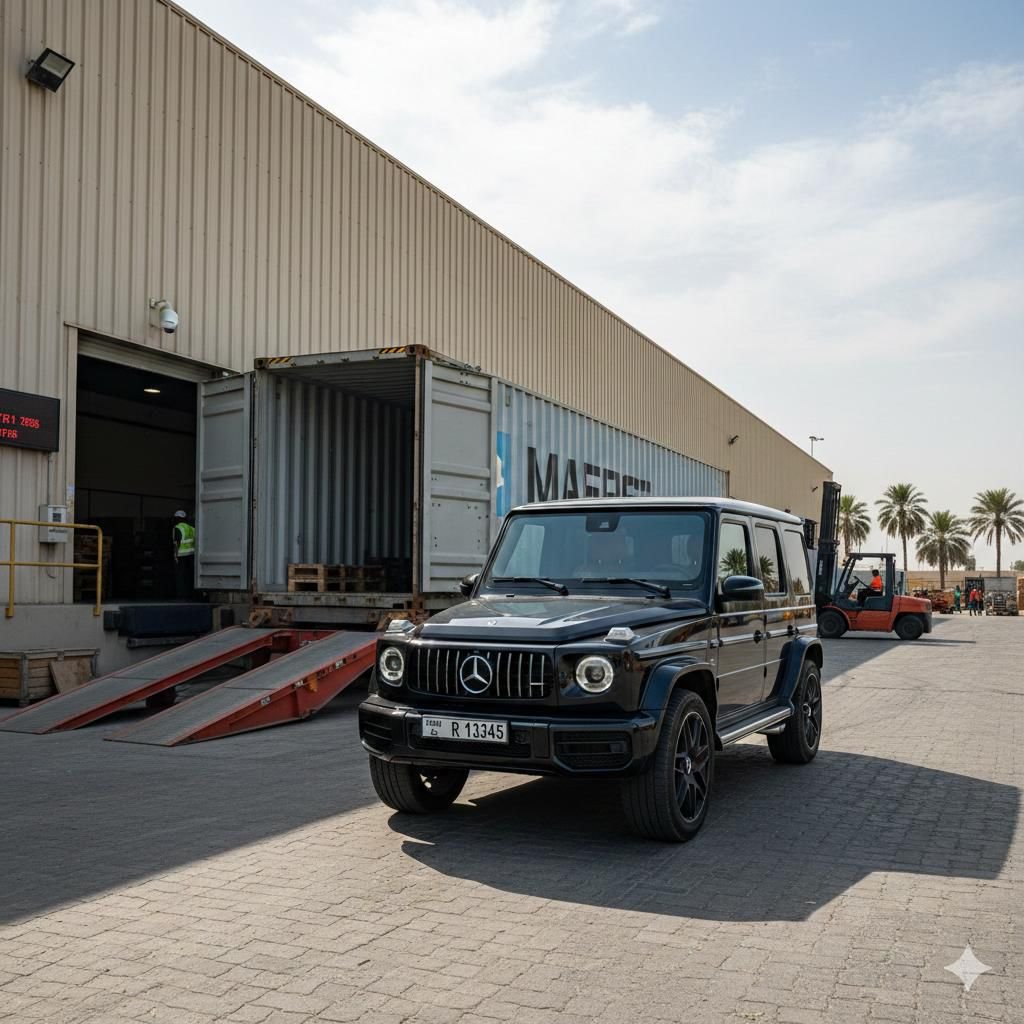
Dedicated Container
- Protection A fully enclosed container reduces exposure.
- Speed Standard sea transit time.
- Scheduling More controlled and predictable.
- Vehicle eligibility Most vehicle types accepted.
- Best for Luxury, classic, or high-value cars.
Shared Container
- Protection Enclosed shared container space.
- Speed Slower due to consolidation.
- Scheduling Depends on container fill.
- Vehicle eligibility Most standard vehicles.
- Best for Standard vehicles requiring enclosed protection.
RoRo (Roll-on / Roll-off)
- Protection Open handling environment.
- Speed Faster port handling.
- Scheduling Fixed vessel schedules.
- Vehicle eligibility Drivable, standard vehicles only.
- Best for Operational vehicles on frequent trade routes.
Is Container Shipping Right for Your Car?
Best for:
Luxury or high-value vehicles with low tolerance for handling risks
Classic, vintage, or collectible cars that need added protection
Customers who prefer reduced exposure during port handling and sea transit
Shipments where a more controlled loading and unloading process is important
Not for:
Your timeline is urgent and demands the fastest possible delivery.
Your vehicle suits open handling and standard port-to-port transit without enclosed protection.
How Container Car Shipping Works
Quote & Route Planning
We begin the process by understanding your needs and requirements. We will need the origin and destination, vehicle make and model, running condition, preferred timeframe, and how you would like to receive updates (by call, WhatsApp, or email). Using these details, we assess suitable sea routes, container availability, and scheduling options for your corridor.
Pickup or Handover (Route-Dependent)
We then arrange the next step based on your route. Your car may be collected from a designated location or handed over at an agreed point, depending on port access, local regulations, and corridor limitations. We clearly confirm what applies so you know exactly where and when your vehicle needs to be made available.
Vehicle Preparation & Condition Notes
Before loading, we ensure basic preparations are completed. This typically includes removing personal valuables and making sure the vehicle is ready for sea transport. If available for your route, we may take condition notes or photos to document the vehicle’s visible state prior to shipment, helping set clear expectations during transit.
Loading & Securing Inside the Container
We carefully position your vehicle inside the container and secure it to keep it stable throughout the sea journey. The goal is to limit movement during transit using appropriate restraints and spacing. While no shipping method is risk-free, container loading helps reduce exposure compared to open handling environments.
Documentation & Departure
Once loaded, we prepare shipping paperwork, including the Bill of Lading. Export and import requirements vary depending on the origin, destination, and local regulations. After the paperwork is in order, the container is scheduled for departure.
Arrival, Clearance Support & Collection/Delivery
Upon arrival, we support you through customs clearance. Once cleared, your car is ready for final collection from the port or for arranged delivery, with updates shared at each major milestone.
Export vs Import — What Changes with Container Shipping?
Shipping your car in a container provides the same high level of protection whether you are exporting or importing. The main differences lie in the documentation, procedures, and requirements at the start and end of the journey.
Export from the UAE
When exporting a vehicle from the UAE, the process typically begins with vehicle handover or port delivery arrangements based on your route. Your car is then moved to the designated port for container loading, where export procedures may apply depending on the case. Certain export documentation or clearances can be required before departure, and requirements may vary by destination country. Once cleared for export, the container is scheduled for sailing, and shipment updates are shared as it moves through key milestones.
View Export Documents GuideImport to the UAE
For imports, the focus shifts to arrival procedures in the UAE. After the container reaches port, clearance support becomes the priority. Import documentation, inspections, or testing may be required depending on the vehicle type and the emirate of registration. Following customs clearance, additional steps such as registration or compliance checks may apply before the vehicle can be driven locally. Duties, taxes, and related fees vary by case and are influenced by several factors, including vehicle value and origin.
Disclaimer: Requirements vary by origin, destination, and emirate, and are subject to change.
Protection, Handling & Risk Control in Container Shipping
Choosing container shipping is about placing your vehicle in a more controlled environment. The primary benefit is that your car travels inside a private, enclosed space, which significantly reduces its exposure to open-air handling and the elements at busy ports. This limits incidental contact and creates a more predictable journey from start to finish.
While we cannot guarantee a completely risk-free process, we focus on structured handling and clear checkpoints. Where possible, a pre-loading condition report is completed, creating a clear reference point for everyone involved and supporting discussions, giving you greater peace of mind.
Inspection stance
Condition notes or photos may be recorded at origin and compared at destination, where offered.
Secure handling
Vehicles are stabilised inside the container to limit movement.
Insurance options
Marine insurance is optional for added protection.
Damage mitigation
Controlled port handling reduces unnecessary contact.
Documents Typically Required (Varies by Route)
Paperwork is one of the main reasons for shipping delays, which is why we review your documents digitally before your vehicle moves toward the port. This early check helps catch missing details and keeps the container shipping process on track. Requirements vary by origin, destination, and local regulations, but commonly requested documents include:
Passport / ID Copy
Identification for both the shipper and the receiver, where applicable.
Vehicle Title or Registration
Proof of legal ownership of the vehicle.
Bill of Lading
Issued after departure as the official shipping record.
Purchase Invoice or Proof of Value
For customs declaration, if required.
Export or Import Certificate
Approval from the relevant authority, depending on the route.
Ports, Sailing Schedules & Transit Timing
Port Operations
Container car shipping depends on fixed vessel schedules and port operations, which largely determine transit timing. In the UAE, shipments often move through major commercial ports such as Jebel Ali in Dubai or Zayed Port in Abu Dhabi, depending on the route and carrier availability. Not all shipments use the same port, and the final port is confirmed during planning.
Sailing Schedules
Sailing schedules vary by corridor and are influenced by vessel frequency, cut-off dates, and operational conditions at origin and destination ports. Seasonal demand, port congestion, and weather can also impact departure and arrival timelines.
Transit Timing
Transit time is not determined by distance alone. It considers the sailing schedule, number of port calls, and export and import clearance requirements. Some routes sail more frequently, while others follow specific windows. We align your shipment with suitable schedules and provide updates at key milestones for smooth planning.
What Shapes Your Container Shipping Quote
Route & Corridor
The origin and destination influence sailing frequency, vessel availability, and port operations. Some corridors run on regular schedules, while others depend on specific sailing windows.
Vehicle Size & Profile
A vehicle’s length, height, and overall profile determine how it is positioned and stabilised. Larger vehicles may require specific placement to ensure safe loading and proper securing.
Container Space & Configuration
The amount of container space allocated and the arrangement of the vehicle inside the container are key planning inputs, including spacing and securing approaches.
Port Handling & Terminal
Each port has its own handling procedures, cut-off timings, and operational flow. These steps directly influence loading, unloading, and overall shipment coordination.
Pickup, Delivery & Service Scope
Some shipments are arranged port-to-port, while others include pickup and delivery. Availability and scope depend entirely on the corridor and local logistics access.
Insurance Selection
Marine insurance is highly recommended but optional, and the premium is tied to the declared vehicle value and your chosen coverage level.
Timing & Seasonality
Preferred sailing windows, seasonal demand peaks, and vessel availability heavily affect how and when a sea freight shipment can be scheduled.
Popular Export Routes
Popular Import Routes
Common Concerns About Container Shipping
Is container shipping safer for luxury cars than RoRo?
Yes, generally. The main advantage is that your car is fully enclosed in a private container, reducing exposure to open-air handling, weather, and incidental contact. While no method guarantees zero risk, a dedicated container provides the highest level of physical protection available via sea freight.
How do you secure the car inside the container?
Our team uses professional techniques to keep the vehicle stable during transit. This usually involves securing it with specialised straps (lashing) and using chocks and blocks to immobilise the wheels, ensuring it stays firmly in place for the journey.
Can I ship spare parts or personal items with the vehicle?
This depends on route regulations, the destination country, and the shipping method. For safety, customs, and security reasons, it is not always allowed. We confirm what is permissible for your shipment during planning.
Can I track shipment progress?
Absolutely. While live GPS tracking is not available, we provide milestone-based updates, notifying you when the container is loaded, arrives at major ports, and is cleared for collection.
What if customs delays happen?
Delays may occur due to inspections or paperwork reviews. We support you through the process, helping ensure documentation is correct and liaising with agents as needed, though final clearance times vary by country.
Container Shipping FAQs
1. How does container car shipping work?
Your vehicle is driven or loaded into a private, sturdy shipping container, which is then secured, sealed, and transported via specialised cargo vessel to the destination port. It is the most protective sea freight method, keeping your car enclosed and isolated throughout the journey.
2. What shapes a container shipping quote the most?
The primary factors are the route and corridor, whether you use a dedicated or shared container arrangement, and your vehicle’s size and dimensions. Port handling requirements and the choice between door-to-door or port-to-port service also influence the final quote.
3. What documents are typically required?
Common requirements include the original vehicle title or registration, a valid passport or ID, and a commercial invoice or proof of value. The essential shipping document is the Bill of Lading. Specific export or import certificates vary by country and will be confirmed for your route.
4. How long does container shipping take?
Transit time depends on the sea distance of your corridor, the vessel’s sailing schedule, and customs clearance efficiency at the destination port. We provide realistic timelines based on your specific route.
5. Do I need insurance for container shipping?
While carriers offer basic liability, additional marine insurance is available for broader protection during transit. We can discuss options based on your vehicle’s declared value and your preferred coverage level.
6. Is container shipping available for imports to the UAE?
Yes. Container shipping is a common and secure method for importing vehicles into the UAE. The process involves customs clearance, possible inspection, and eventual registration, all of which we can guide you through.
7. Air vs Sea: When should I choose air freight instead?
Choose air freight when speed is the priority. While sea freight is reliable and secure, air freight significantly reduces transit time, often delivering vehicles internationally in days rather than weeks.
Get a Container Shipping Quote
Ready to get started? Provide us with your origin and destination, the make and model of your vehicle, its running condition, and your preferred timeframe. Let us know if you would like us to reach out via WhatsApp, call, or email, and we will handle the rest.
Get My Quote