
A car from the UAE can be registered in the UK, but first it has to prove it is fit for British roads. That proof is either a Certificate of Conformity, an Individual Vehicle Approval (IVA) certificate, or, for cars over 10 years old, a valid MOT. Most cars built to GCC specification have no European Certificate of Conformity, so the realistic routes are IVA for newer cars and an MOT for older ones. The order matters too: HMRC first, then approval, then DVLA.
This guide explains which route applies to your car, what an IVA usually involves for a Gulf-spec car, and the paperwork DVLA expects. It assumes the car is coming to the UK permanently. For the shipping side, see our Dubai to UK car shipping service.
Which route applies to your car
| Your car | Approval route | What you need before DVLA |
|---|---|---|
| Built to European spec, with a Certificate of Conformity showing mph and left-hand traffic headlamps | Certificate of Conformity | The COC, plus an MOT if over 3 years old |
| Built to GCC (or another non-European) spec, under 10 years old | Individual Vehicle Approval | IVA certificate, plus an MOT if over 3 years old |
| Any car (up to 8 passenger seats) first registered or built more than 10 years ago | Exempt from approval | A valid MOT |
These routes come from DVLA’s guide to importing a vehicle and the DVSA exemptions list. Check the build and first registration dates on the car’s documents before you choose a route. A car a few months short of 10 years still needs approval.
What a Certificate of Conformity is, and why a GCC car rarely has one
A Certificate of Conformity is issued by the manufacturer to confirm that a particular car was built to an approved European type. DVLA only accepts it if it shows the speedometer reads in miles per hour and the car is suitable for driving on the left.
A car built for the Gulf market was made to GCC standards rather than to a European approved type, so the manufacturer generally has nothing to certify. Toyota GB, for example, states on its certificate of conformity page that grey imports from outside Europe will not have met European standards. The exception is a car that was built to European specification and later taken to the UAE. Its manufacturer may be able to issue a COC, but if that COC shows km/h or right-hand traffic headlamps, the car will need converting and a GB conversion IVA instead.
If you are buying in Dubai with a UK move in mind, ask the seller or dealer which market the car was built for. That answer, together with the car’s age, tells you which route you are on.
Individual Vehicle Approval for a GCC-spec car
IVA is DVSA’s inspection for cars that are not type approved for Great Britain. There are two levels. Basic IVA is a visual inspection with tests and usually needs no documentary evidence. Normal IVA is more detailed and needs evidence. A car designed for driving on the right, which covers UAE cars, qualifies for Basic IVA as a left-hand drive vehicle, according to the IVA inspection manual.
The DVSA fee is £199 for a test in working hours and £40 for a retest, according to the current fee table. When the car passes, DVSA issues an Individual Approval Certificate, which you send to DVLA.
DVSA’s guide to getting an IVA pass and its IVA manual name changes a car from outside Europe commonly needs:
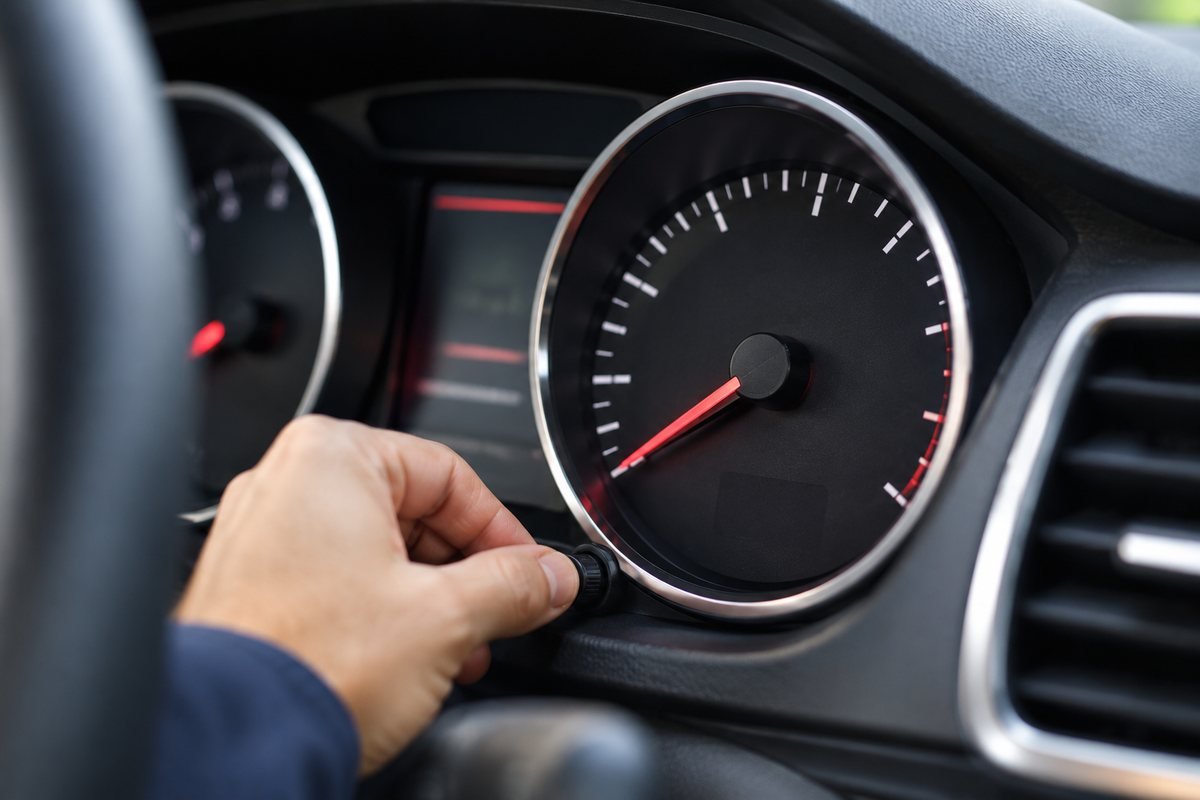
- Speedometer in mph. A dial needs mph marks at intervals of no more than 20 mph.
- Headlamps that dip to the left. A car set up for right-hand traffic usually needs new units or adjustment.
- A rear fog lamp. At least one red, E-marked rear fog lamp on the centre or driver’s side, with a warning light inside the car.
These three points are a starting list, not the whole inspection. The manual also covers mirrors, lamps, seat belts, tyres, emissions and more. An IVA preparation workshop can inspect the car before the test and price the work, which is usually a larger cost than the test fee itself.
The UAE is not on DVSA’s list of non-European standards that shorten testing. That list covers mass-produced cars from the USA, Canada, Japan and Australia, and personal imports from Australia, New Zealand, Singapore and Hong Kong, so a GCC car gets no shortcut.
Cars over 10 years old: the MOT route
If the car was first registered or built more than 10 years ago, it does not need vehicle approval. It does need a valid MOT, because DVLA asks for one on any car over three years old. The MOT still checks lamps, so a GCC car will usually need the rear fog lamp and correctly dipping headlamps before it passes. The MOT fee is capped at £54.85 for a car.
The order of the paperwork
gov.uk sets the sequence for importing a vehicle as follows:
- Customs. The car is declared on arrival and duty and VAT are paid, or Transfer of Residence relief is claimed. Our guide to the cost of shipping a car from Dubai to the UK works through the duty and VAT.
- NOVA. HMRC must be told within 14 days that the car has arrived. Your shipping or customs agent normally files this. DVLA advises waiting 48 hours after HMRC confirms before you apply to register.
- Approval. You arrange the COC, IVA or MOT, as set out above.
- Registration and tax. You apply to DVLA on form V55/5 and pay the first vehicle tax.
- Insurance. You insure the car before driving it.
Until the car is registered, you may only drive it to a pre-booked MOT or approval test, and only if it is insured. It can be insured on its VIN for that journey.
What DVLA asks for on form V55/5
DVLA’s guidance lists:
- the completed V55/5;
- the original foreign registration document, which DVLA keeps (for a car exported from Dubai, confirm whether DVLA needs the registration card, the RTA export certificate or both);
- the proof of approval (COC or IVA certificate);
- an MOT certificate if the car is over three years old;
- documents proving your name and address;
- the £55 first registration fee and the first vehicle tax.
The registration certificate (V5C) can take up to six weeks to arrive. Number plates can only be made once DVLA has issued the registration number.
What to sort out before the car leaves Dubai
A common cause of delay at the UK end is a document that was not gathered at the UAE end. Before collection, gather the original registration card, the RTA export certificate, the purchase invoice or proof of value, and your passport photo page and proof of your UAE and UK addresses for a Transfer of Residence claim. If the car is financed, settle it or get the lender’s written release first. Our guide to exporting a car from Dubai covers the RTA side, and our guide to importing a car from Dubai to the UK covers duty, VAT and relief.
Send the make, model, year and specification of the car, where it is now and where it is going in the UK through our car shipping quote form. We will plan the collection, freight and UK arrival so the car lands with the documents the approval and DVLA stages depend on.