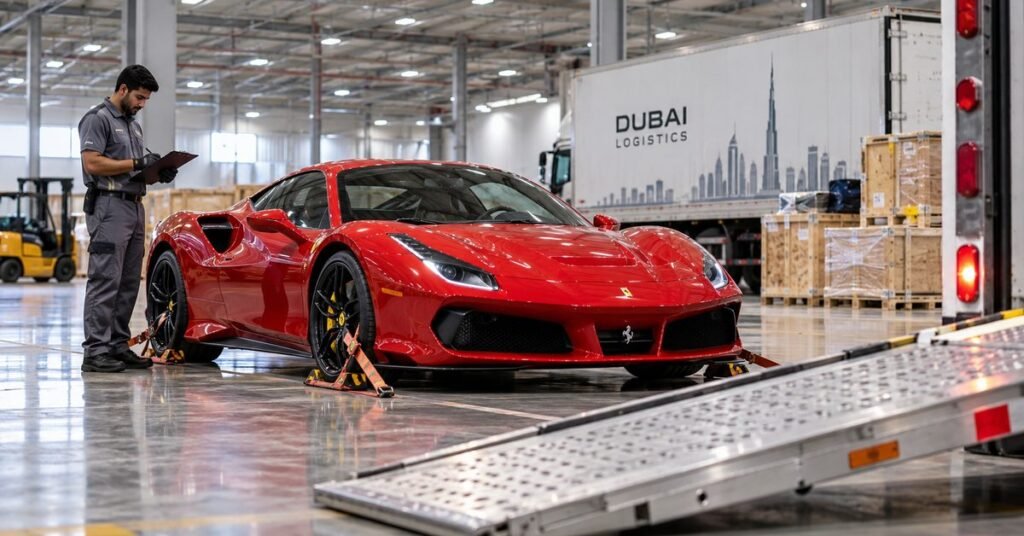
Before shipping a Ferrari to Dubai, establish the exact vehicle specification, its running condition, the planned transport method and the intended use after arrival. Then agree the documents, preparation instructions and collection record before the car leaves its current location.
This matters because ‘a Ferrari’ is not a complete shipping description. A plug-in hybrid, a modified road car and a vehicle that cannot be driven onto loading equipment raise different questions. Giving the coordinator the right information early is more useful than sending a model name and asking for the next flight.
Opera Shipping’s Ferrari shipping service to Dubai provides the starting point for discussing the car, route and handling requirements. Use the checklist below to prepare that conversation.
Identify the car beyond its badge
Provide the model, model year, VIN through the agreed private channel, current location and ownership status. Confirm whether the vehicle starts, moves, steers and brakes, and describe any issue that could affect loading. Include modifications that alter height, width, ground clearance or normal operation.
The distinction between a manufacturer’s specification and the shipment itself is worth checking. Ferrari’s official 296 GTB technical information identifies its hybrid system and lists a dry weight with a qualification about optional lightweight equipment. That dry figure is not automatically the gross weight of the car as presented for transport, including any shipping equipment.
Use the manufacturer’s information to identify the vehicle correctly, then let the shipping provider establish which measurements and condition details are needed for the actual movement. Do not substitute an online specification for a required measurement.
Declare the powertrain before the air booking is assessed
A Ferrari 296 GTB has a plug-in hybrid powertrain. The shipping enquiry should identify that clearly rather than describing the vehicle only as petrol-powered. The same habit applies to any model with a high-voltage battery.
IATA’s 2026 battery guidance distinguishes hybrid-powered vehicles from vehicles whose principal power source is a battery. Ask the provider to confirm the classification and preparation required for your exact model and carrier. Do not apply a battery-electric vehicle’s preparation checklist to a hybrid solely because both contain a battery.
Obtain the preparation instructions before making changes. Do not disconnect, open or otherwise work on a high-voltage system yourself to satisfy a shipping assumption. If a check or intervention is needed, agree who is qualified and responsible for carrying it out.
The useful question is: ‘What must be confirmed for this vehicle to be accepted on the proposed service?’ This keeps the discussion tied to the booked movement rather than someone else’s previous shipment.
Agree the loading approach for the actual vehicle
Tell the coordinator about low ground clearance, front-lift equipment, non-standard splitters, side skirts and any operating instructions that handlers need. Photographs help explain what is fitted, but they do not replace the provider’s assessment.
Ask who will handle collection and loading, what information they need from the owner, and how instructions will reach the people receiving the vehicle. A feature known to the salesperson is of limited use if it never reaches the loading team.
For an air freight car shipment, confirm the proposed handling and acceptance process before collection. If a dedicated container is being considered instead, ask for that method’s preparation plan separately. Do not assume the two methods use interchangeable instructions.
Create a condition record that another person can use
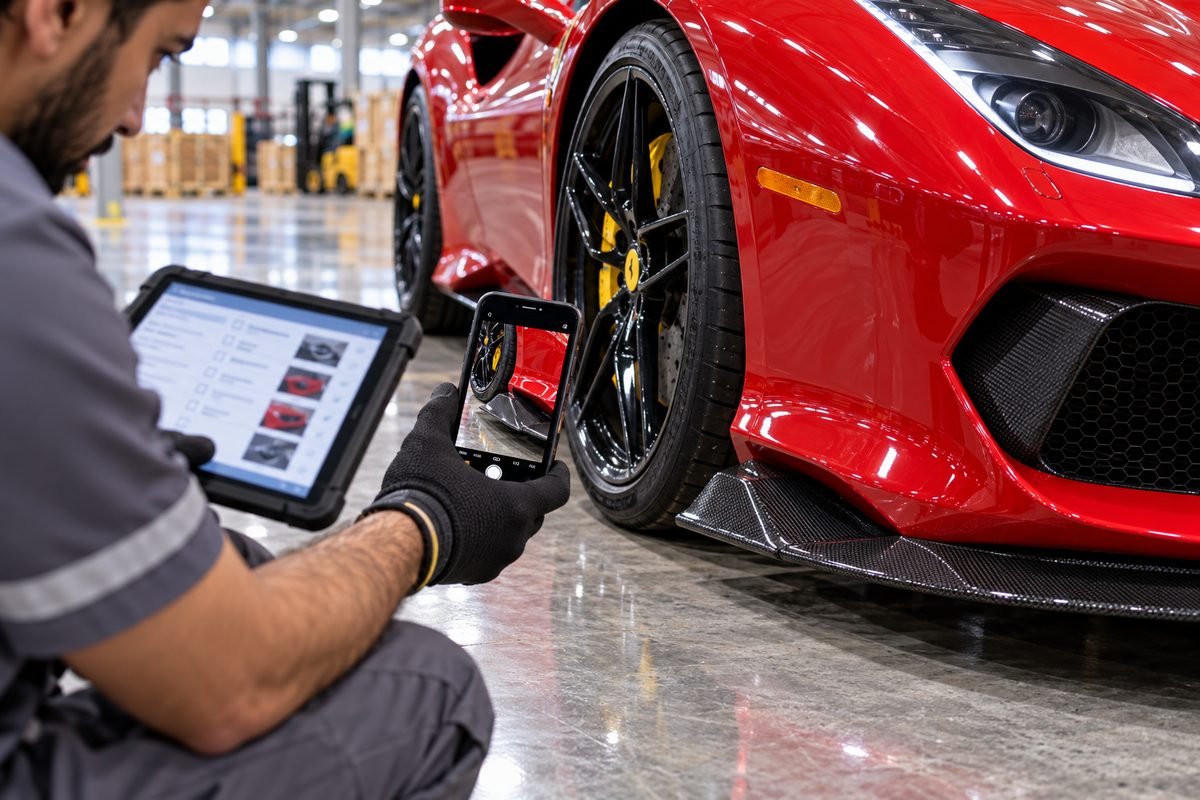
Before handover, ask how the vehicle’s condition will be recorded and how you will receive the record. A useful record should let the receiving party understand which car was collected, what was present and which existing marks were noted.
As an owner, prepare clear photographs of the exterior, wheels and accessible bodywork, along with any existing damage or area you want specifically recorded. Ask the handler how to document the interior, mileage, keys and items accepted with the car. Photograph safely; do not place yourself underneath a vehicle to obtain a picture.
Keep a separate written inventory for keys and agreed accessories. Personal belongings should not simply be left inside on the assumption they form part of the shipment. Confirm what can travel and how it will be listed.
Keep the vehicle identity, dated photographs, observations and accepted inventory together. The recipient can then compare the car with one complete collection record instead of piecing together messages from several people.
Confirm the arrival plan before the departure
Decide whether the vehicle is being imported for registration and road use in Dubai, temporarily moved, delivered to a business or sent to storage. Explain that purpose when requesting the document checklist.
Dubai’s RTA vehicle registration requirements include conditions relating to imported vehicles, documents and inspection. Customs arrival and road registration are separate steps. Having freight booked does not establish that all registration requirements have been met.
Ask the coordinator which documents must be available before dispatch, who is responsible for destination processing and where the car will go after release. A buyer importing a newly purchased Ferrari should also clarify what the seller supplies and in whose name the ownership and shipment documents will be issued.
If someone else is receiving the car, settle their details and the required authorisation in advance. Do not leave the final recipient as an assumption in an otherwise detailed transport plan.
Put responsibilities into one collection brief
Give each participant the same essential information. A concise collection brief should identify:
- The vehicle, collection address and agreed contact.
- The shipping method and preparation instructions already confirmed.
- The person responsible for documents and any unresolved item.
- The condition record, keys and accepted accessories.
- The destination recipient and agreed final handover point.
- The coordinator to contact if the car or collection arrangements differ from the booking.
An assistant, dealer or relocation coordinator can use this brief to keep the owner, seller and shipping provider aligned. Any important change should be communicated before the vehicle is collected.
What to check at the destination handover
Arrange for the recipient to have the collection record available. Ask them to inspect the vehicle at handover, compare the agreed inventory and record any discrepancy promptly using the provider’s and insurer’s reporting process.
Clarify whether the final service ends at delivery, a storage facility or another agreed point. If the car still needs local registration or another step before road use, keep that responsibility visible. ‘Delivered’ should describe an agreed milestone rather than suggest that every ownership and use requirement is automatically complete.
To plan your move, send Opera Shipping the Ferrari model, origin and preferred arrival date. Include its powertrain, running condition and any relevant modifications so the quotation and preparation discussion begin with the right car.