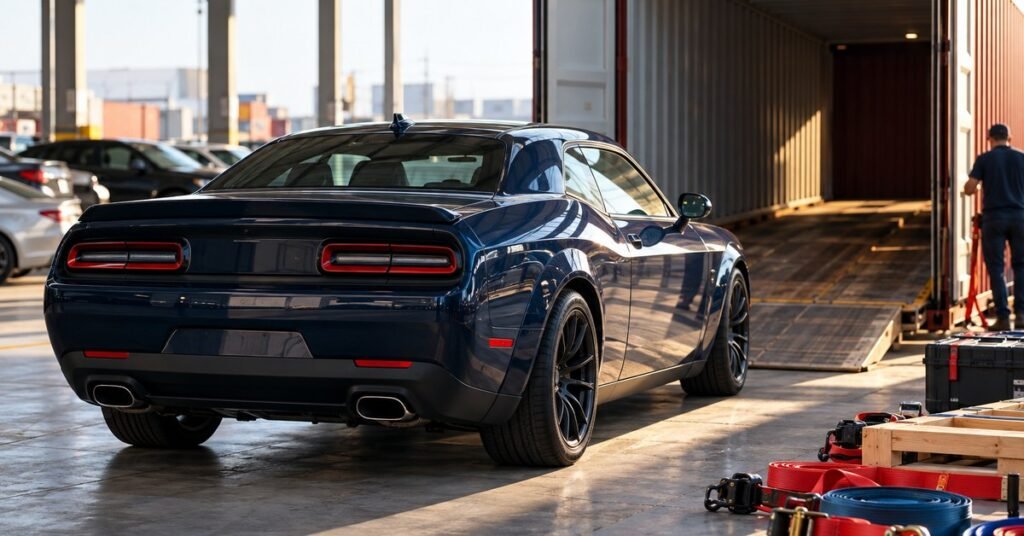
Importing a car from the USA to the UAE involves two sets of rules. The US side controls whether the car can leave: its title must be presented to US Customs and Border Protection (CBP) in advance, and an electronic export filing is required. The UAE side controls whether the car can be registered once it arrives. A purchase that satisfies one side and not the other can leave a car stuck at a port or unusable on the road.
This guide covers both sides in the order you will meet them, from checking the title before you buy to registering the car in Dubai. Opera Shipping’s car import service can coordinate US collection, export handling and freight to Dubai once the car is confirmed as eligible.
Before you buy: read the title, not just the photos
US titles can carry brands such as salvage, rebuilt or flood. In the UAE, burnt, water-damaged, rebuilt and non-repairable cars are banned from import and registration, a rule reported when the regulator announced it in 2017. A US government trade report also describes the UAE regulator’s system for enforcing bans on dismantled, flood-damaged, fire-damaged and junk-titled vehicles.
This matters for auction purchases, where damaged vehicles can be listed alongside clean-title cars. Before you bid or pay a deposit, get the title status in writing and check the vehicle history against it. If the title carries a damage brand, assume the car will not be accepted in the UAE unless you have confirmed otherwise with the authorities.
Specification and steering
A US-market car is left-hand drive, which suits UAE roads. It is not a GCC spec car, so registration in Dubai requires proof of Gulf-specification compliance from the Ministry of Industry and Advanced Technology (MoIAT) when the customs card does not show compliance. The RTA sets this out on its vehicle registration service page, together with the technical inspection required for imported cars.
Before buying a US car for use in Dubai, confirm what MoIAT will require for that model. The cost and time of the compliance route belong in your purchase decision, not in a surprise after arrival. Our guide to identifying a GCC spec car explains how to check a VIN and what to do when a car is built for another market.
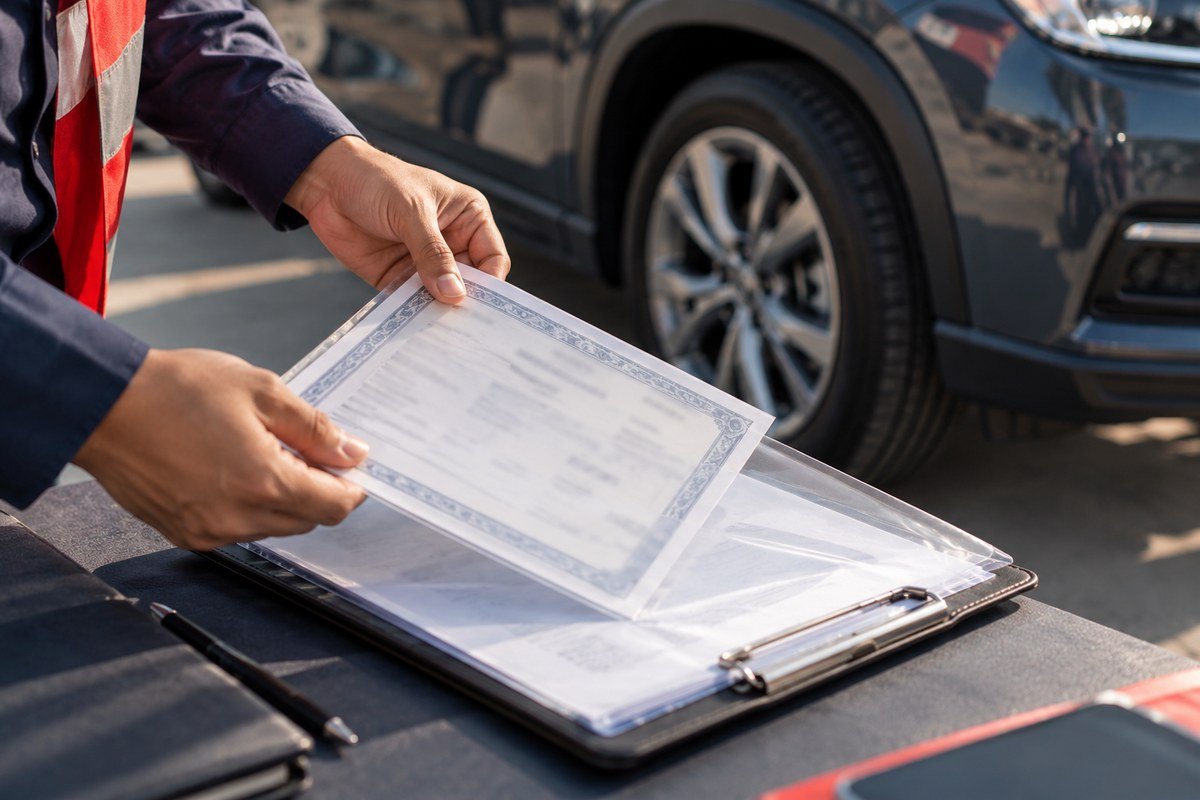
The US export requirements
CBP requires the vehicle and its documents to be presented at least 72 hours before export for shipments by sea or air. For a US-titled car, that means the original title or a certified copy, plus two copies.
Used vehicles also need an Electronic Export Information (EEI) filing through the Automated Export System. CBP’s guidance states that this filing is required for all used self-propelled vehicles regardless of destination, value or condition, and the resulting Internal Transaction Number goes to CBP with the ownership documents. The usual value threshold for export filings does not apply to used cars.
Three practical consequences follow:
- The title must be available before the export window. A title still held by a lender, or lost in the post after purchase, can stop the shipment.
- Expect the name on the title and the exporter’s details to be checked against each other. If they differ, ask your forwarder what supporting paperwork is needed.
- Build the 72 hours into your timeline. It sits between collection and loading, and it cannot be shortened by booking an earlier vessel or flight.
Choosing sea or air from the USA
The method depends on the car and your deadline. A dedicated container keeps the car sealed from loading in the USA to unloading in Dubai, which suits a valuable car that is not urgently needed. Air freight shortens the journey considerably, and our guide to air freight car shipping costs explains how that price is calculated.
Collection matters as much as the main leg. Tell us whether the car is at a dealer, an auction yard or a private address, because each has its own release process and opening hours.
Arrival in Dubai: duty, VAT and registration
UAE customs duty is 5% of the CIF value, which includes the car, freight and insurance. Import VAT of 5% is then calculated on the value including duty, according to the Federal Tax Authority’s importer guidance. On a car with a hypothetical CIF value of AED 300,000, that means AED 15,000 duty and AED 15,750 VAT before other fees.
After clearance, Dubai Customs issues a Vehicle Clearance Certificate. The RTA then asks for your Emirates ID, the electronic customs certificate, the purchase agreement, the MoIAT compliance document, a passed technical inspection and UAE insurance. Our general guide to importing a car to the UAE includes a worked duty and VAT example.
A timeline you can plan around
| Step | Who acts | What can hold it up |
|---|---|---|
| Title and history check | Buyer | Branded or missing title |
| MoIAT compliance question | Buyer, with dealer or authority | Model-specific requirements |
| Collection in the USA | Shipping coordinator and seller | Auction release rules, access |
| CBP 72-hour presentation and EEI filing | Exporter or forwarder | Title not in hand, name mismatch |
| Sea or air freight | Carrier | Space availability |
| Dubai customs clearance | Importer or broker | Valuation queries |
| Inspection and RTA registration | Owner | Compliance document, insurance |
Get a USA to Dubai quote
Send the VIN, the car’s current location in the USA, whether you already hold the title and the date you need it in Dubai. We will set out the collection, export, freight and arrival steps in one plan. Use our shipping quote form to start.